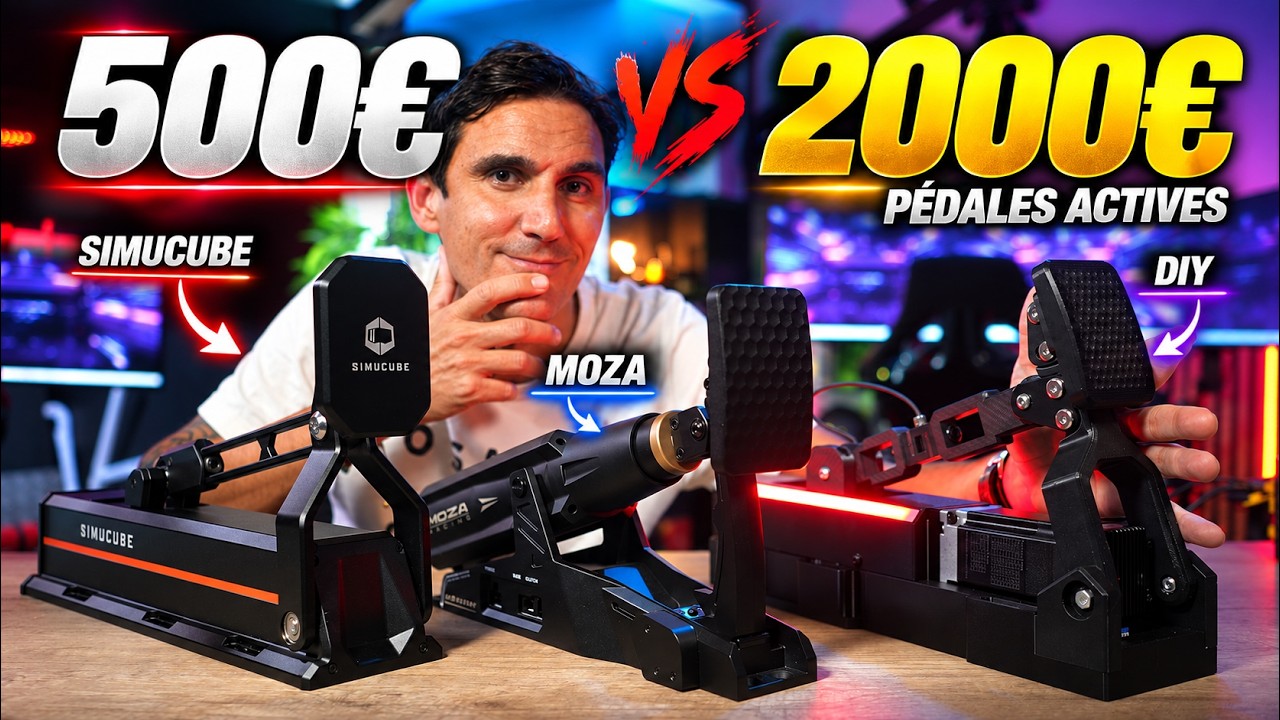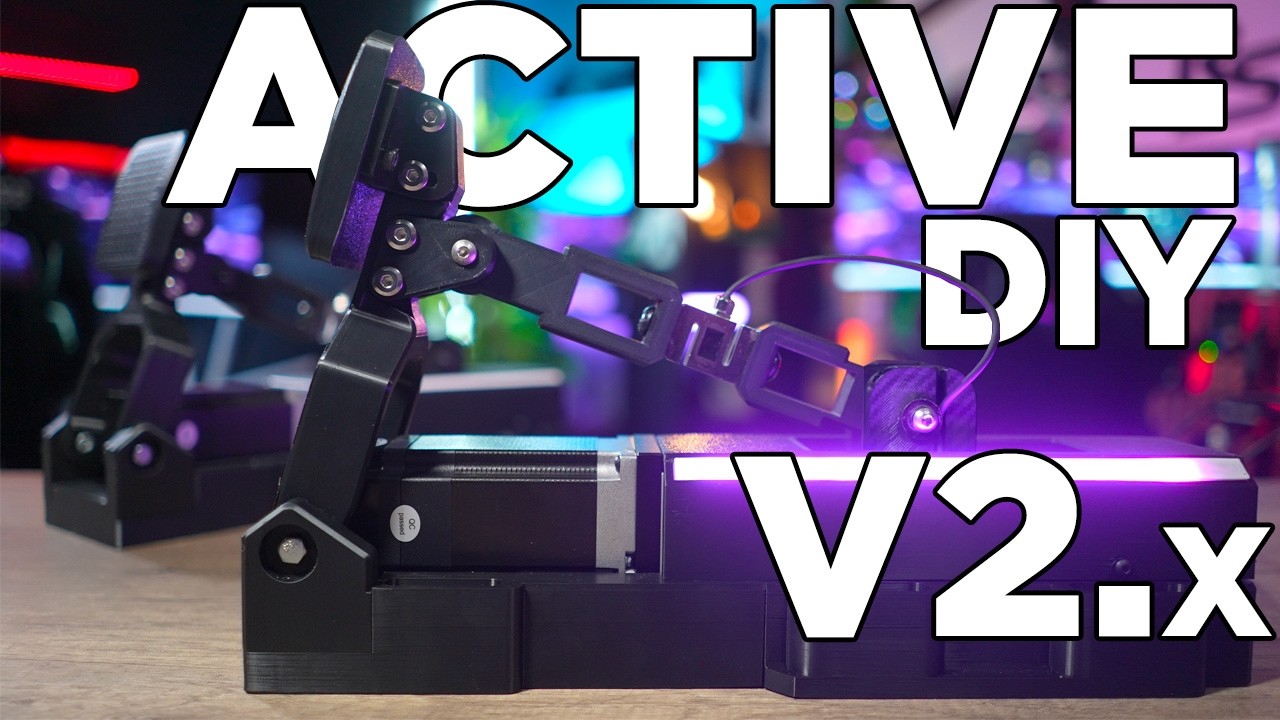
I tried the ActivePedal Pro thanks to Monsieur Olive, who lent me his Simucube set. After using a DIY active pedal and the MOZA mBooster, I wanted to understand what this solution added in my own driving. These impressions cover several weeks: the software and ABS matter greatly, but the baseplate and heel support also play a decisive role in my comfort.
Why the complete set and baseplate matter
I drive in socks and am particularly sensitive to contact underfoot. The Simucube heel support has a gentle slope, generous length and adjustable angle. Its shape lets me find comfortable support and a good angle for operating the brake.
The plate also helps install this fairly long pedal on an existing support. On my rig, its mounting holes made the complete set easy to install and remove while switching equipment. It costs extra, but for me its role goes beyond simply holding the pedals in place.
The borrowed throttle is an older passive version. By the time of the video, Simucube offers the Co-Pedal for use as either a throttle or clutch. It is therefore important to distinguish the set shown here from later retail combinations.
Construction and contact underfoot
The ActivePedal Pro combines a load cell, motor and lead screw to move the pedal according to the force applied. Its quoted maximum resistance is 110 kg. I like the black-and-orange presentation, the sensor integration and the overall perceived quality.
The completely flat, untextured face surprised me initially. While driving, it became one of the elements I appreciated most. Height and angle can be adjusted mechanically. The starting point set in software also changes the initial pedal angle, allowing fine adjustments without leaving the seat.
Moving it by hand outside normal use, the rail is not as free or quiet as one might imagine. I demonstrate its noise in the video and notice greater resistance at the start of movement. That does not describe its in-game feel, however: once powered and configured, the pedal becomes very smooth underfoot. In my installation, the mechanical noise blends into the PC and game sound.
Connections to account for
The pedal has a power switch and a power-supply input. PC connection goes through the Simucube Link Hub: the pedal connects to that box over RJ, and the hub connects to the computer by USB. It therefore needs to be included when planning the purchase.
Ports also allow complementary pedals to be connected. The presentation mentions connecting Heusinkveld pedals too. My focus in this test remains the borrowed set and its behaviour, rather than validating every possible combination.
My settings in Simucube Tuner
I begin in the configuration menu with the starting point, which I like at around 8 mm. The main screen brings together the force curve and the signal limits sent to the game. I keep a dead zone at the start so I can rest my foot lightly, plus a little margin at the end to reach 100% before my chosen physical limit.
I set travel to around 33–34 mm and force to 34.5 kg. These are personal preferences: I do not want an almost immovable brake. The available range allows fairly low resistance, which matters for this use. I add around 5 kg of preload.
The software offers damping during application and release, friction, and extra firmness at the beginning or end of movement. I did not need those additions to enjoy the pedal. Profiles can be saved, or chosen from a catalogue that includes settings from simracers and drivers.
Smoothness, braking and ABS
Across several weeks and simulations, smoothness is the strongest distinction in my experience. With moderate resistance and relatively long travel, I feel no grain underfoot. This is exactly the range in which I noticed a clear difference from my mBooster and DIY versions.
I even increased my braking travel, feeling that it helped me work on progressive release. I felt more confident and more aggressive in some braking situations. That remains a personal impression, without a protocol capable of quantifying a universal performance gain.
ABS is the only telemetry effect I really use. Its vibration feels responsive, well synchronised with the game and more nuanced in intensity. I prefer it to the simple vibrations of added motors. I have not tried the ActivePedal Ultimate, so this review cannot establish the difference between the two Simucube models.
What we liked
- Smoothness at moderate force and the quality of contact.
- The adjustable heel support and comfort of the complete set.
- ABS feel and the settings brought together in Tuner.
What we liked less
- The very high budget, discussed as around €2,000 in the video, which needs consideration in the context of the whole cockpit.
I like this pedal a great deal, but regard it as a late purchase for an already well-equipped installation. A similar budget can cover a substantial part of a first simulator.
Join the discussion on YouTube