Reaching 10,000 subscribers marks a new stage for Realistic Simcockpit. We take stock of our community spaces, our planned visit to the Simracing Expo and the work behind our hardware testing.
From the first videos to a community
It started four years earlier with a Formula 1 POV at Singapore. That first video reached around 90,000 views and brought in 300 subscribers. More POV videos followed, then reviews as our equipment evolved alongside the wider availability of direct-drive bases, including Fanatec models and the Thrustmaster T818.
Our professional background in filmmaking shapes that approach, but the channel still fits around work and family life. As comments and private messages multiplied, we began missing some questions.
A Discord server, a website and a small racing game
The new Discord is intended as a discussion space around the channel, rather than another extensive collection of brand-specific hardware channels. We want somewhere to share ideas, small creations and beta projects more easily, with room for community contributions and mutual help. At the time of this announcement, the server is still empty.
The website launch also includes a small home-made racing game inspired by OutRun and the arcade games of the 1980s and 1990s. It offers external and cockpit views, with a deliberately challenging approach. The time-trial principle is straightforward: everyone uses the same car and settings. Monthly challenges are mentioned as a possibility, not an established schedule.
A planned visit to the Simracing Expo
Travelling from Réunion, we plan to attend the Simracing Expo on Friday, Saturday and part of Sunday. Meeting the community is one aim; another is getting hands-on experience with equipment that is difficult to access locally, including unfamiliar wheels, 6DOF motion systems and other seat movers.
Short reports, live discussions and photos shared through the website or Discord are among the coverage options under consideration. Above all, the trip is intended to broaden our experience beyond the equipment available at home.
Why testing takes time
We favour extended use over a quick hands-on session. Exploring software, adjusting settings, driving and researching all come on top of the unboxing and conclusions. Producing footage in 4K at 50 frames per second, gathering B-roll and editing also create a substantial workload.
That process explains the backlog. It also means revisiting comparisons as simulations evolve, rather than attributing a change in the game to the hardware being tested.
VR and steering wheels: different stages of testing
The Pimax Dream Air SE has just been unboxed, but testing has not begun at the time of recording. Its new facial interface and replaceable foam are introduced; the expected comfort and field-of-view benefits still need checking. VR comparisons remain plans rather than completed findings.
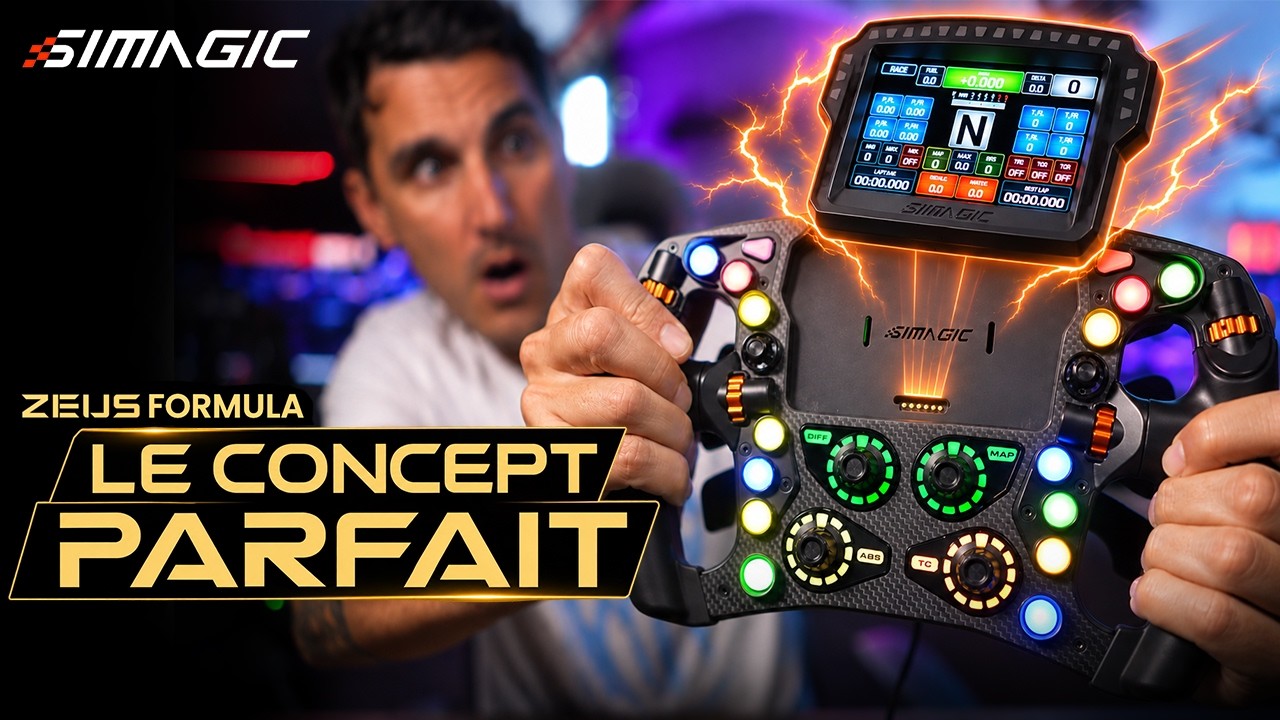
By contrast, we have already spent several months exploring the Simagic Zeus Formula and its MagicDash. We have also been driving with the Conspit 300GT, particularly appreciating its matte screen and responsive display, although we have not yet confirmed the panel technology.
The Conspit Ares 12 Nm has made a very positive initial impression in Le Mans Ultimate, especially in the sensations associated with oversteer and understeer. That is not yet a final comparative verdict, however.
The perspective of everyday use
After almost a year with the VNM 18 Nm, including telemetry-based force feedback, our assessment of its force-feedback quality remains very positive. We do have a reservation about the USB pass-through via the slip ring, although its limitations are not explored in detail here.
The seat mover has also been in use for several months. Both examples highlight the difference between experience already gained and a finished article or video: extensive driving time does not mean the presentation work is complete.
Join the discussion on YouTube