Reviews / 11 March 2024
Direct drive or pedals: my equipment journey and priorities
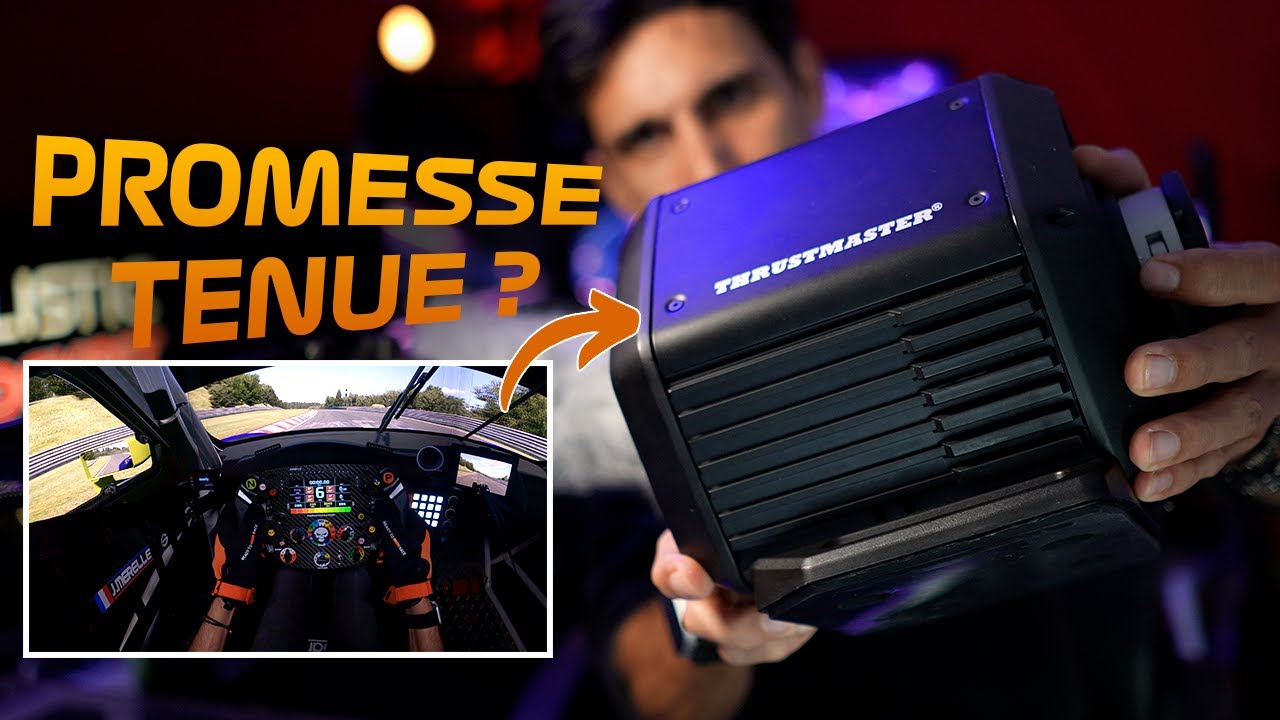
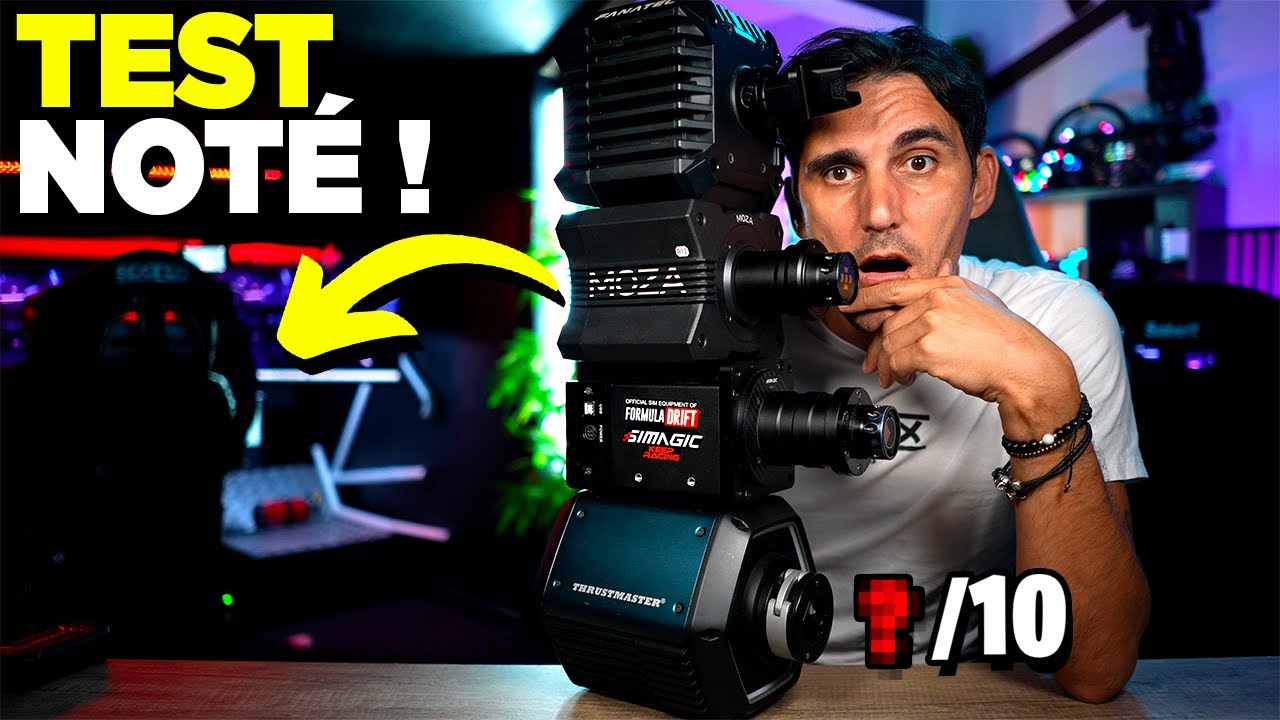
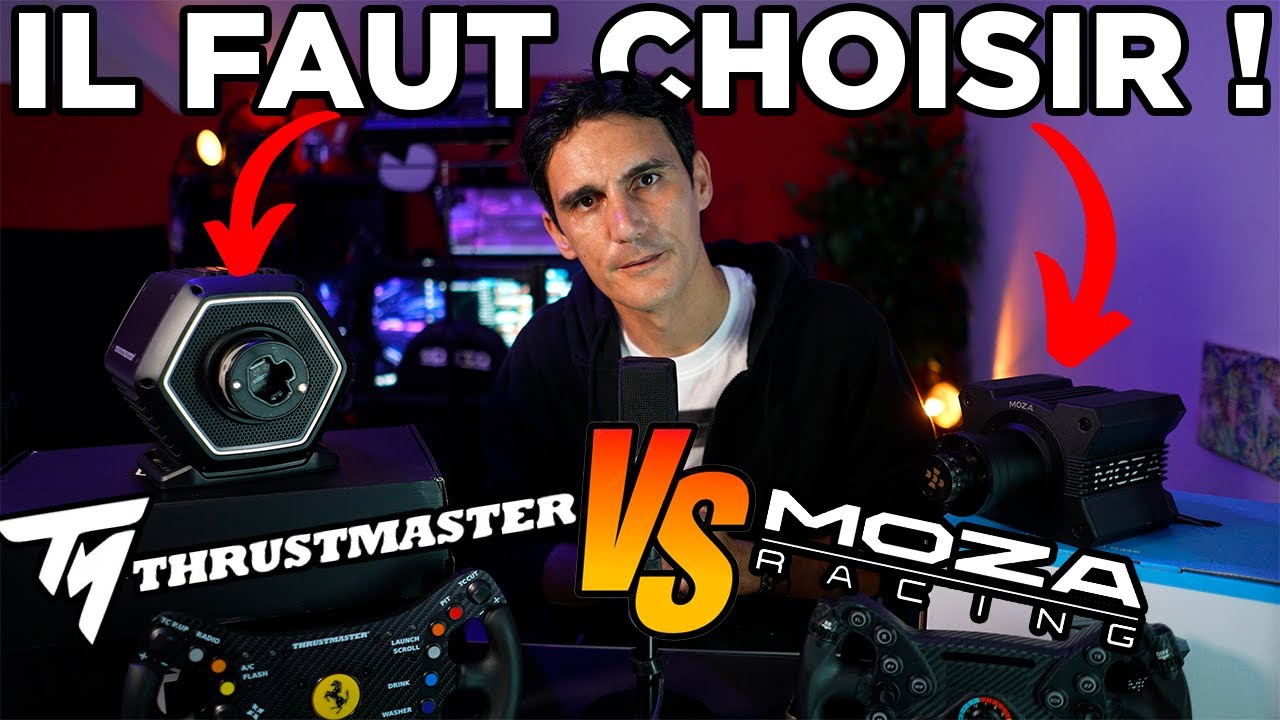
I reinstalled my Thrustmaster TS-PC Racer to compare it with the T818 and Simagic Alpha Mini while keeping the installation as consistent as possible. The aim was to rediscover a belt-driven base after several years of Direct Drive, then compare my impressions with lap times. This 2024 video also looks back at my own progression and explains why I place so much importance on the wheel and pedals.
My progression: the wheel matters too
I started with a controller, then a T300 set attached to my desk. My first important change was moving to the Thrustmaster T-LCM load-cell pedals. I was driving in DiRT and F1 before discovering iRacing. A CSL DD 8 Nm and a cockpit then improved my driving position and stability.
I nevertheless sold the CSL DD and returned to a TS-PC Racer. The reason was the SF1000 wheel: it was the one whose grip I enjoyed most, and I was waiting for the T818 so I could keep using it. That step sums up my priority: your hands touch the wheel, and grip comfort can matter more than a base’s specification sheet.
Torque, feel and the comparison method
A Direct Drive base connects the motor directly to the steering. In my experience, its main benefits are smoother rotation and clearer feedback. Torque reserve also leaves room for stronger demands without requiring permanently heavy steering.
Game gain needs to match what the base can deliver. In these tests, excessive demand causes saturation and makes some effects harder to distinguish. The torque figure alone therefore describes neither comfort nor the quality of the settings.
For the iRacing comparisons, I keep the Thrustmaster Ferrari 488 GT3 wheel, Fanatec V3 Inverted pedals, circuits and Porsche GT3. I repeat the height, wheel-distance and screen-distance measurements. The pedals are deliberately unchanged: this is not a comparison of complete bundles at different price levels.
The T818 as my first reference
I begin with the T818 at full power in its manager, in Performance mode, then adjust iRacing. At the Red Bull Ring, relatively smooth tarmac contrasts with pronounced kerb impacts. At the Nürburgring, suspension movement and surface irregularities provide more information through the wheel.
I find the package quiet and pleasant. My main criticism at this stage concerns the steering end stop, which is insufficiently defined in this version. For EA Sports WRC, I reduce gain and switch to Sport mode for less tiring driving. The quick release makes switching wheels between disciplines easier.
Returning to the TS-PC Racer
Belt and fan noise are immediately more apparent. I also feel a mechanical texture in rotation, even during calibration. That does not prevent enjoyment or understanding the car’s behaviour.
At the Red Bull Ring, I quickly approach the lap time achieved with the T818. Some kerbs, however, become very faint, and small surface details blend into the belt’s feel. Force-feedback data shows considerable saturation with my settings. Interestingly, I find the end-stop resistance better than on the T818 tested here.
Changing wheels involves more handling, with a screw and collar to undo. Rally driving remains fun, but I distinguish surface types less clearly and still feel the mechanism during corrections.
The Alpha Mini and the importance of settings
With the Alpha Mini, I recover clear, progressive resistance, more readable impacts and smooth rotation. The iRacing preset contains too much road detail for my taste, so I soften it while retaining the force build-up I want.
Rally also takes adjustment because the supplied profile does not suit me. Once tuned, corrections and countersteering feel very responsive. The quick release simplifies wheel changes. After the session shown, the base is warm.
What the lap times show
The best Red Bull Ring laps remain very close. The Alpha Mini produces my best time and good consistency, but it was also the last base used: learning the circuit may explain part of the result. The TS-PC even slightly beats the T818 in this series. Less prominent kerbs can encourage cutting them more; more information does not automatically mean a faster lap.
Keeping the same good pedals allowed me to repeat braking despite the steering changes. That is why I would prioritise a precise brake and stable installation before an expensive base. Direct Drive clearly increases my enjoyment and the quality of the sensations, without replacing driving practice.
What we liked
- The smoothness, detail and quick wheel changes of the Direct Drive setups tested.
- Consistent braking from using the same pedal set throughout the comparison.
What we liked less
- Some overly busy profiles and the T818’s steering end stop in the 2024 version.
- The noise and less detailed feedback of the TS-PC.
These observations concern my hardware and settings in 2024. The lap times remain close and do not establish a universal performance gain from Direct Drive.
Join the discussion on YouTube