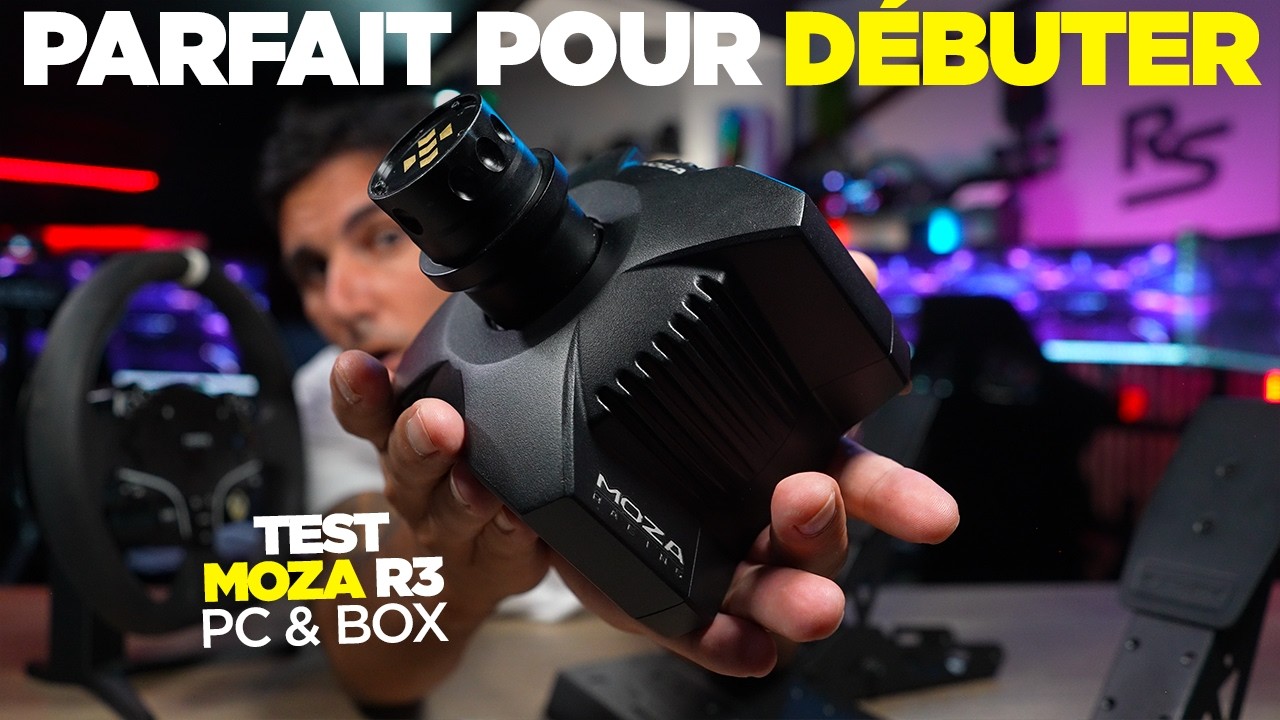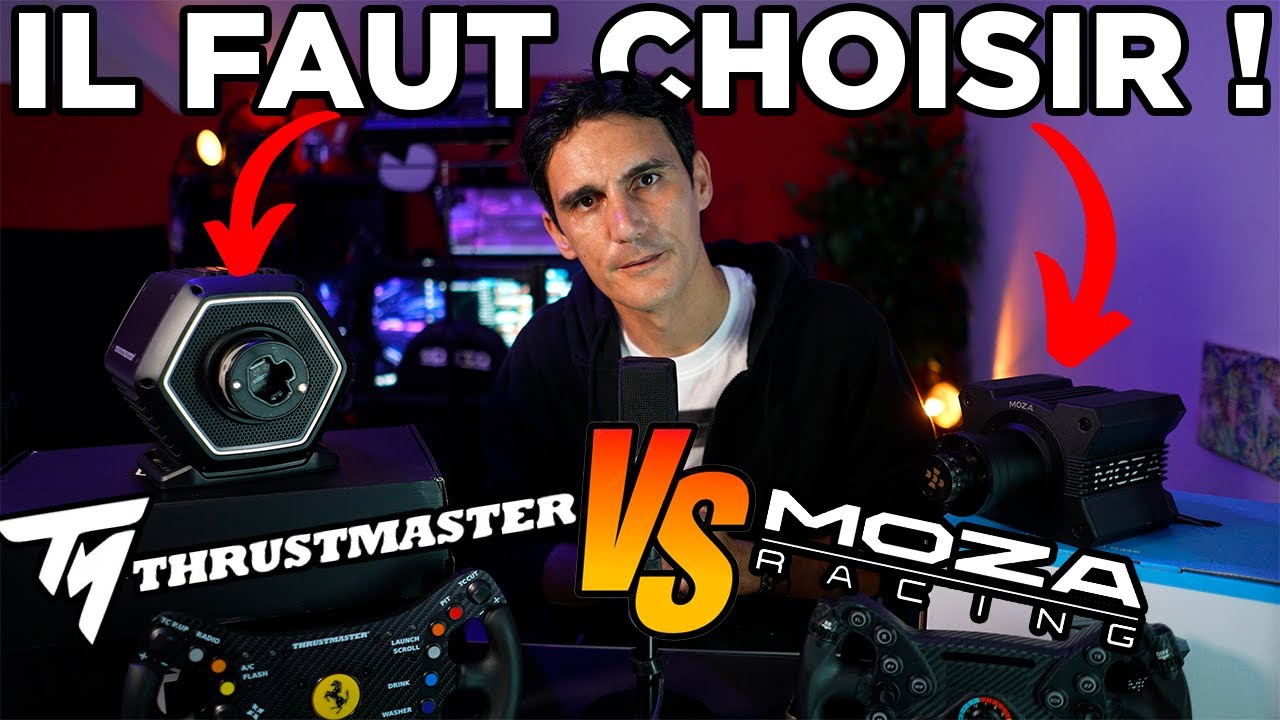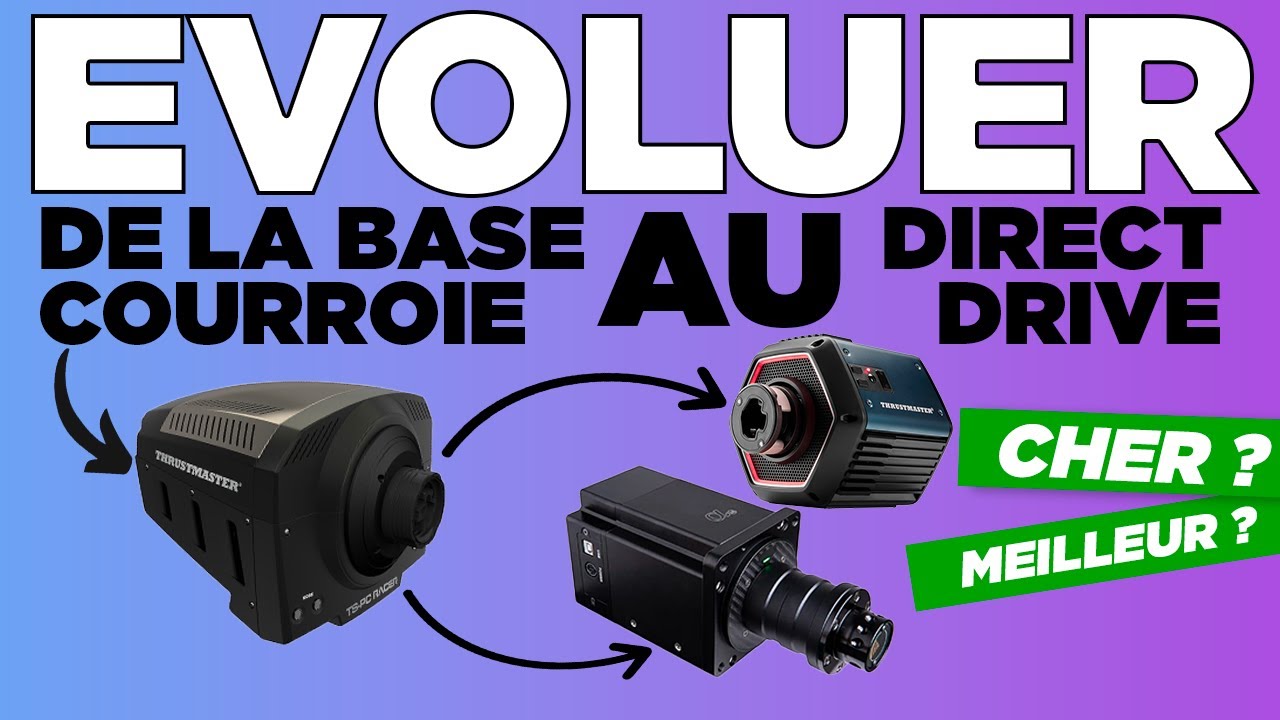
After the R9, I wanted to discover what the MOZA R12’s 12 Nm actually add and understand the changes brought by FFB 3.0. My test covers the base, its different versions, installation and settings. The driving experience is convincing, but heat, certain accessories and profile management deserve as much attention as the torque figure.
A compact base with distinct versions
The R12 retains the compact shape of the R3, R5 and R9 family, with an aluminium finish I like. Unboxing reveals the power supply, USB cable and base protected inside a bag. At the prices discussed during filming in March 2025, its price-to-torque ratio looks particularly attractive. However, I recommend considering a meaningful power increase when upgrading: several small steps can be expensive without providing lasting satisfaction.
The R12 V1 and its 15-bit encoder must be distinguished from the V2 announced with a 21-bit encoder. Front mounting also changed: the earliest V1 units lack it, unlike an intermediate revision and the V2. The R12 name alone therefore does not identify every mounting possibility, especially when buying used.
Quick release and installation
The D1 Spec-style quick release provides a firm connection, without play or flex in my direct installation. I can also build a simple rim or use another brand’s wheel, provided it has its own USB connection for controls. Mechanical compatibility does not automatically transmit a competing wheel’s data through the base.
Rear sockets accept MOZA accessories and reduce the number of USB cables running to the PC. I mention the optional ESX wheel for Xbox use; my test remains focused on Windows. The conventional bottom mounting pattern makes cockpit installation straightforward. I prefer a rigid support: the desk bracket I previously tried with the R9 could introduce flex.
I am less positive about the MOZA extension tested here. It clips on through an additional quick release, and I experienced knocking that I reduced by lowering certain effects and overall force. I distinguish this reservation from the quality of direct mounting. Changes between versions and accessories also require checking compatibility carefully before assembling an installation.
Pit House: extensive control with some gaps
With the power off, I clearly feel the motor’s notches. Once the base is powered and correctly configured, this cogging becomes almost imperceptible in my hands. Software therefore plays an important role in the final result.
Pit House centralises MOZA equipment updates, even when devices are connected separately through USB. It offers rotation angle, force, damping, return speed and interpolation settings. Profiles provide a starting point, but their selection sometimes lacks consistency: several variants exist for certain games, while I find no Le Mans Ultimate preset during this test. Launching a game from Pit House does not automatically activate my preferred profile.
The force-feedback equaliser is one of the tools I find most useful. It can reduce ABS-related vibrations without simply lowering all the force. The steering stop is adjustable too, providing distinct resistance at the end of travel. The Bluetooth-connected mobile app offers another way to change parameters without leaving the game.
What FFB 3.0 changes on track
I compared the old and new firmware in the same iRacing session while retaining the settings. The first already felt more natural than my memory of the R9; the new version mainly adds detail and a stronger connection to tyres, road and suspension. It is not an absolute revolution: I also feel less resistance, which can make a small increase in game force worthwhile.
The 12 Nm are welcome through compressions and heavily loaded corners, particularly in ACC and Le Mans Ultimate. They offer more room before saturation. However, oscillations remain possible in LMU. In rallying, I quickly find a good result in Dirt Rally 2.0, while some EA Sports WRC profiles require more work and give me an impression of delayed response.
Everyday verdict
The base gets hotter than I hoped; this also depends on the force and effects requested. I notice a slight noise in a quiet room, and the absence of a power indicator on the base makes it easy to forget to switch off. These reservations do not remove the driving enjoyment or the ability to adjust the output precisely.
What we liked
- Torque headroom and the detail of FFB 3.0.
- Firm direct mounting and the compact form.
- Pit House’s equaliser and adjustable steering stop.
What we liked less
- Heat and the absence of a power indicator.
- Knocking from the extension tested.
- Incomplete profiles and the lack of automatic selection.