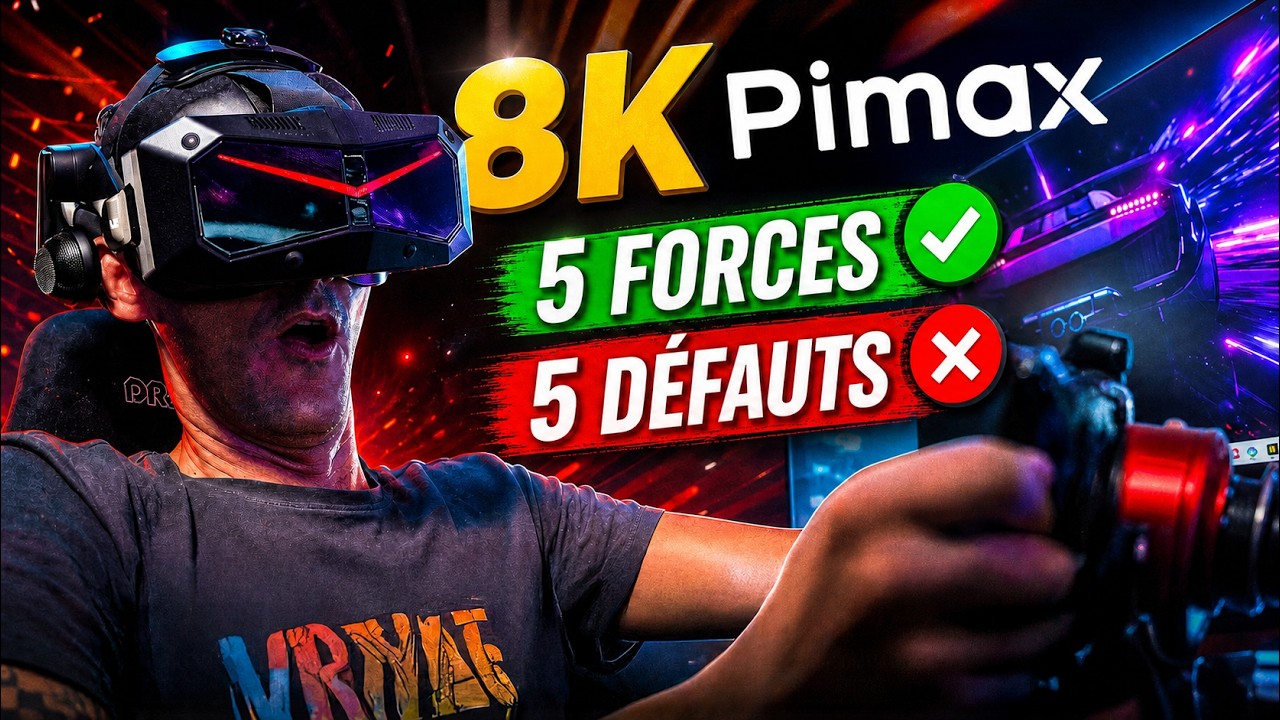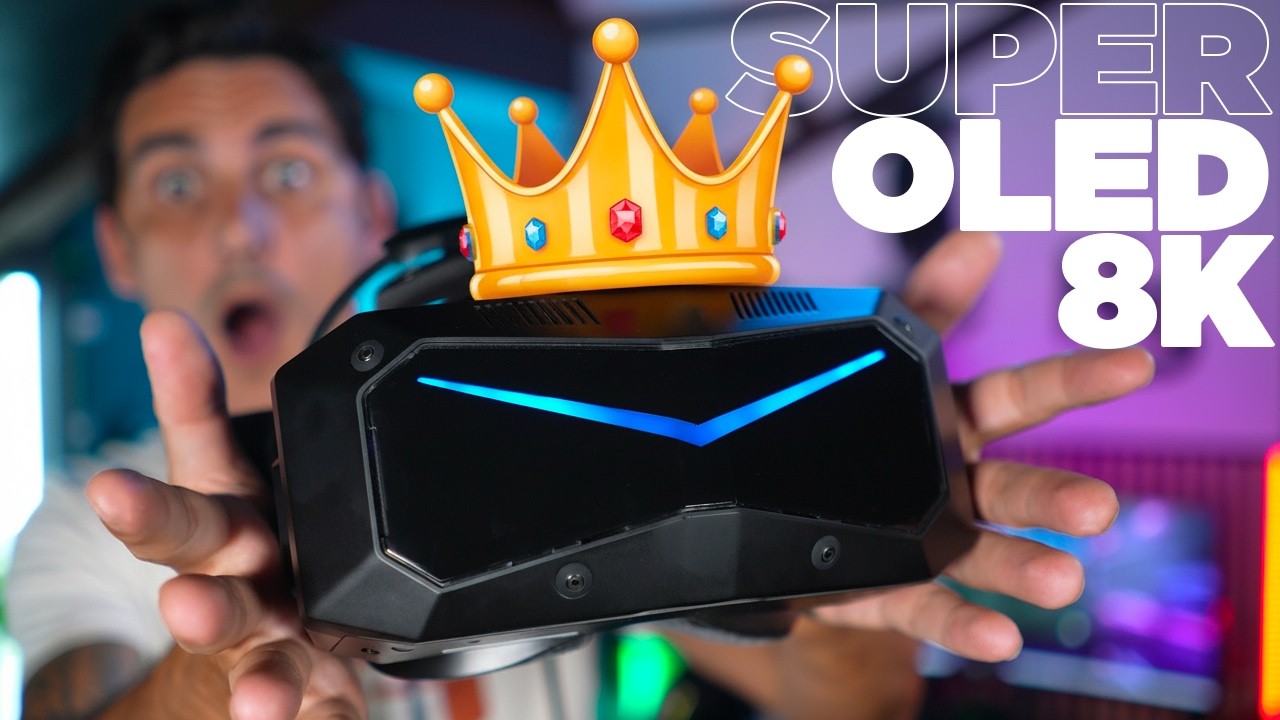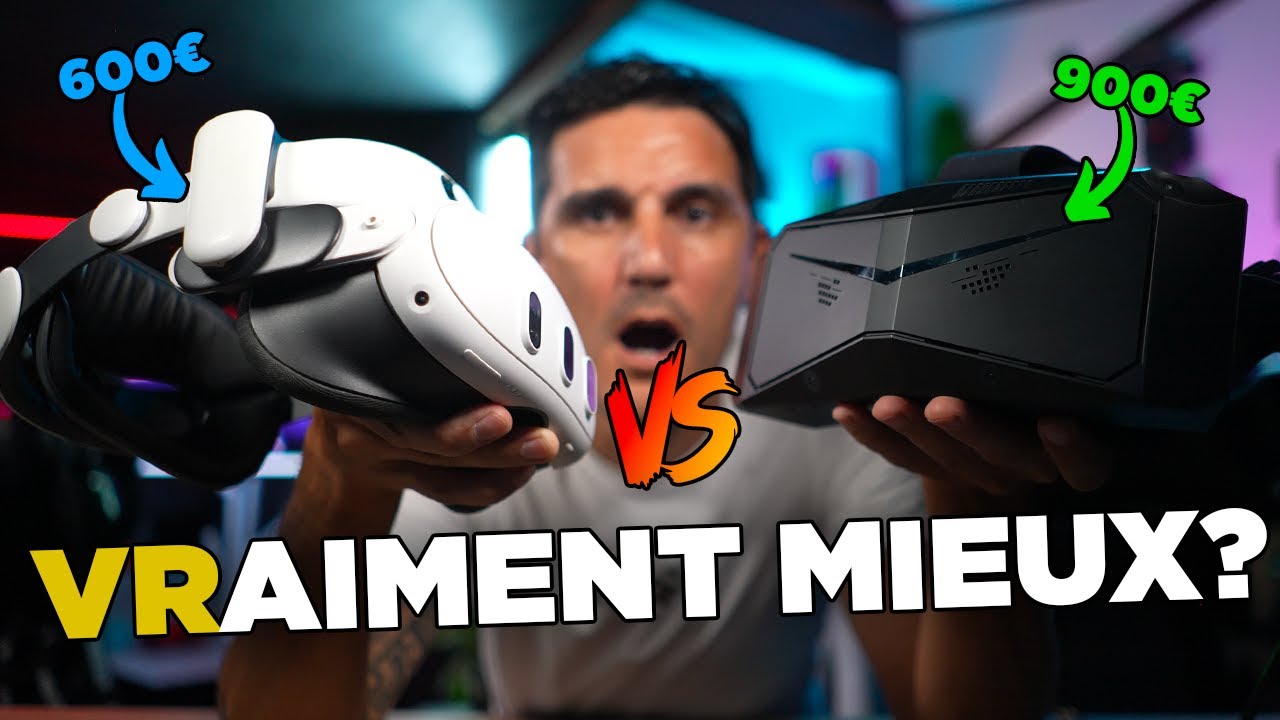
The Dream Air surprised me more than any other Pimax headset I had tried at the time. It delivers a highly detailed image in a form that feels much less intrusive than the Crystal models. My Lighthouse review unit, loaned by Pimax, remains expensive and needed some facial-interface adjustments. This is what that combination actually changed in my cockpit.
A different kind of comfort
The stated 170 g weight illustrates the change in form, although comfort also depends on the strap and cable. Moving from the Crystal models to the Dream Air, I mainly notice less inertia when turning my head and less pressure on my face. In a cockpit where I may sit for a long time, that matters as much as resolution.
With my strap adjustment, the headset stays in place rather than moving against my nose like some bulkier designs. I also prefer the soft contact around the nose. Routing the cable above the cockpit works best for me, but I also used it down my back. The small connection box stays behind me without hitting me as I move.
Micro-OLED and lenses: readable fine detail
The Micro-OLED displays provide deep blacks and contrast that I particularly appreciate in dark cockpits and night scenes. It is not just about colour: the readability of small lettering, numbers and instruments is one of the strongest parts of the experience.
The pancake lenses contribute to both compactness and clarity. With this unit, I enjoy fine details without the same positioning difficulties I experienced on some Crystal models. A direct DisplayPort connection also suits my PC simulation use.
I am cautious about relying on field-of-view figures alone. Software version and eye position make a noticeable difference, and my measurements did not always match those of other users. The wide mode I tested suited me without any distortion I found distracting. I therefore focus on the view available after fitting the headset properly.
Changes to my review unit
My headset arrived with an early facial interface. I had anticipated this and obtained a Studioform kit with a synthetic-leather cushion. I show a 12 mm version selected for my comfort, not as a universal recommendation for every face.
I also secured the interface using its screw locations instead of relying only on the magnets. The slight movement that bothered me happened mainly while putting the headset on. Part of this loan unit’s front cover had also come loose. I show that condition without assuming all production units share it.
Those details temper my enthusiasm. At this price, I expect a well-finished experience even when the optics are convincing. The accessories and modifications shown are part of the actual conditions behind my comfort assessment.
Lighthouse installation and software settings
The tested version uses SteamVR base stations. It has no front cameras and therefore no passthrough view of the room. I tried two generations of stations: initial tracking acquisition seemed easier with V2 units, then tracking remained stable during my sessions. I did not test the SLAM version in this video.
On the PC side, the connection box brings together DisplayPort, USB and power. Pimax Play, followed by Pimax EVO in the version shown, provides refresh-rate, resolution and IPD settings alongside eye-tracking calibration. Eye tracking can enable dynamic foveated rendering, concentrating detail where I look when the software chain supports it.
I show the choice between 72 and 90 Hz. Even with capable hardware, the target must suit the game and situation. My RTX 5070 tests in iRacing were very satisfying, but the busy Spa sequence also shows a frame-rate drop. It is not a promise of constant performance in every scenario.
Audio and everyday use
The integrated sound seems better than on earlier Crystal headsets, although there is still room for improvement. The microphone is usable and the physical controls are neatly integrated. During testing, neither internal fan noise nor airflow towards my eyes bothered me.
Accessing some settings from inside the headset and quickly recentering the view helps me stay in the session. The combination of secure fit, low bulk and readability ultimately won me over. The price discussed when filming, around €2,100, remains a significant limitation.
What we liked
- Low bulk and the fit achieved with my adjusted facial interface.
- Instrument clarity, deep blacks and image depth.
- Integrated sound and settings accessible during use.
What we liked less
- The high price and the adjustments needed on my review unit.
- External base stations and no passthrough on the tested Lighthouse version.