Reviews / 29 September 2025
Simagic Alpha EVO Sport or Pro: comparing force feedback
Choosing between the 9 Nm Alpha EVO Sport and 18 Nm Alpha EVO Pro is not simply about doubling force. I compare their behaviour with the same wheels to distinguish responsiveness, torque headroom and installation requirements. My aim is to understand what the Pro actually adds, without assuming that a more powerful base automatically makes a driver better on track.
One family, two sizes
The range presented includes the 9 Nm Sport, 12 Nm EVO and 18 Nm Pro. The two tested bases share their general architecture, 21-bit encoder, active cooling, RGB halo and SimPro Manager. I retain the GT NEO as the reference wheel, then use a heavier combination of NEO X, dished rim and accessories. The wheel is part of the equation: its weight influences the experience alongside the choice of base.
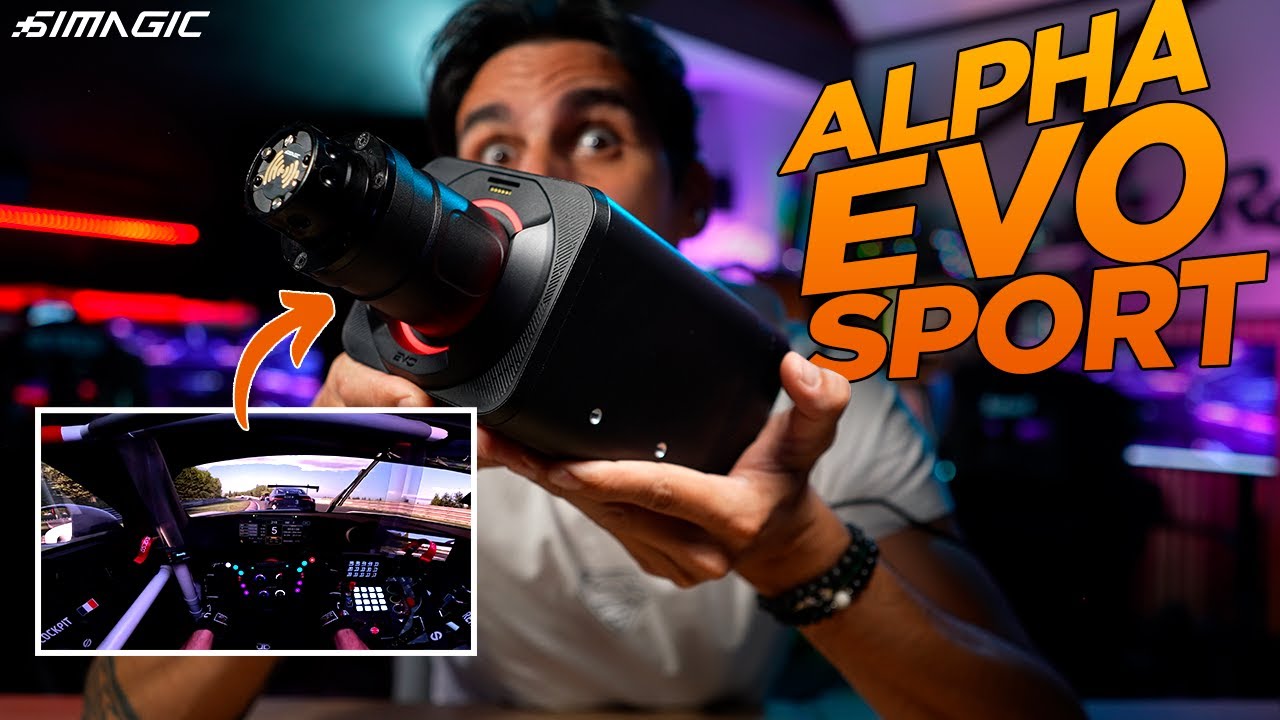
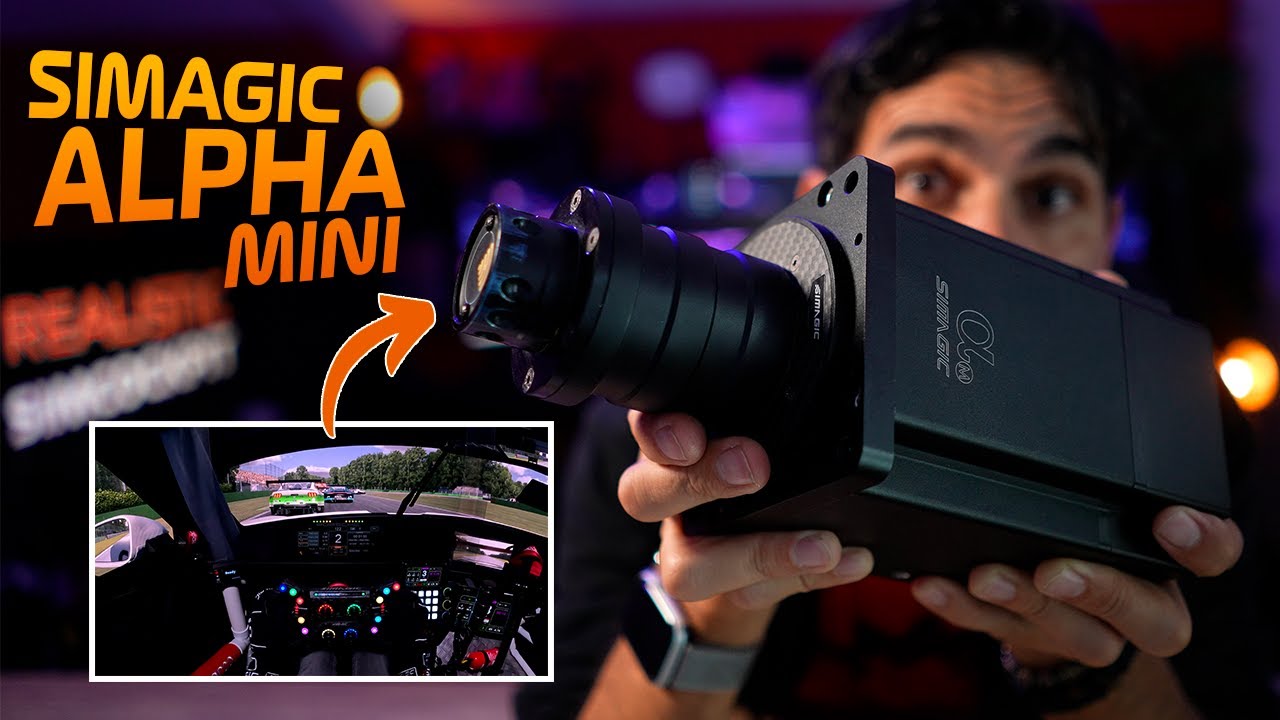
Unboxing the Pro follows the Sport, with USB cables, power supply and mounting screws. The Pro is longer and heavier, with a larger power supply. Its additional depth can also make the power button harder to reach. I like the overall finish, although the plastic parts of my Sport picked up marks during repeated handling for filming.
Mounting and mechanical smoothness
Mounting options follow the same logic: bottom mounting, side mounting with an accessory and suitable front solutions. A front bracket can complicate access to the magnetic connector intended for displays. The whole installation therefore needs consideration, including cables and future accessories.
With the power off, I feel no notches on these EVO bases. The Sport’s rotation feels lighter still than the Pro’s. In driving, however, I noticed no significant difference in response speed. The main advantage of 18 Nm is the headroom to reproduce several strong demands simultaneously.
Adjusting force and keeping a clear stop
SimPro Manager centralises profiles, filters and updates. I can personalise profiles and have them activate automatically for each game. With the Pro, I retain its capability in software and lower simulation gain to the level I want. Friction, inertia, damping and slew rate adjust the steering’s weight and liveliness.
Steering-stop adjustment also matters to me. On a freely rotating base, the motor must clearly indicate the end of the selected angle. Simagic’s soft lock performs that role well in my tests. The illuminated halo provides telemetry or can be disabled. It is not the main reason to choose a base, but it worked consistently in the games tested.
Clipping seen and clipping felt
In iRacing, I retain the same car, circuit and force level to compare peaks. The Sport already communicates small details and cornering resistance. Adding a kerb or contact can reach its limit: the signal smooths out, without necessarily causing a complete loss of force feedback.
The Pro leaves more headroom, although I also made it saturate in certain conditions with high force. My driving impression changes less than the meter might suggest. In this test, 18 Nm did not make me feel like a better driver. I mainly see a fidelity benefit during combined demands, rather than a promise of better lap times.
A heavier wheel or extension makes that reserve more relevant. If I want to retain the same perceived effort while moving more mass, the 12 or 18 Nm versions provide extra headroom. Conversely, with a light wheel and suitable settings, the Sport remains very convincing.
USB passthrough and software development
At this stage, the QR-A has been released, making USB connection of a third-party wheel through the base a practical option. The wheel cable enters the active quick release; a second USB cable at the rear connects this function to the PC. Cabling remains, but no longer hangs between the wheel and computer.
The GT NEO and NEO X can also use USB with SimHub to expand lighting and match it to the car. Several updates arrived during filming: my impressions relate to the versions tested, and capabilities continue to evolve.
Choosing with the cockpit in mind
I would choose the Sport to limit spending while retaining detail and versatility, and the Pro for headroom, heavy wheels and demanding combinations. The cockpit matters equally: I felt resonance on a lighter installation that disappeared on my 160-profile rig. This concerns vibrations transmitted through the mounting, rather than simply resisting torque. Reducing responsiveness or adding damping can help; retaining budget for the cockpit remains sensible.
What we liked
- Smooth, fast response from both models.
- The Pro’s additional headroom during large peaks.
- Automatic profiles and USB passthrough with the QR-A.
What we liked less
- Potential resonance depending on mounting.
- Plastic sections marked by handling.
- The Pro’s extra bulk, which needs planning for.