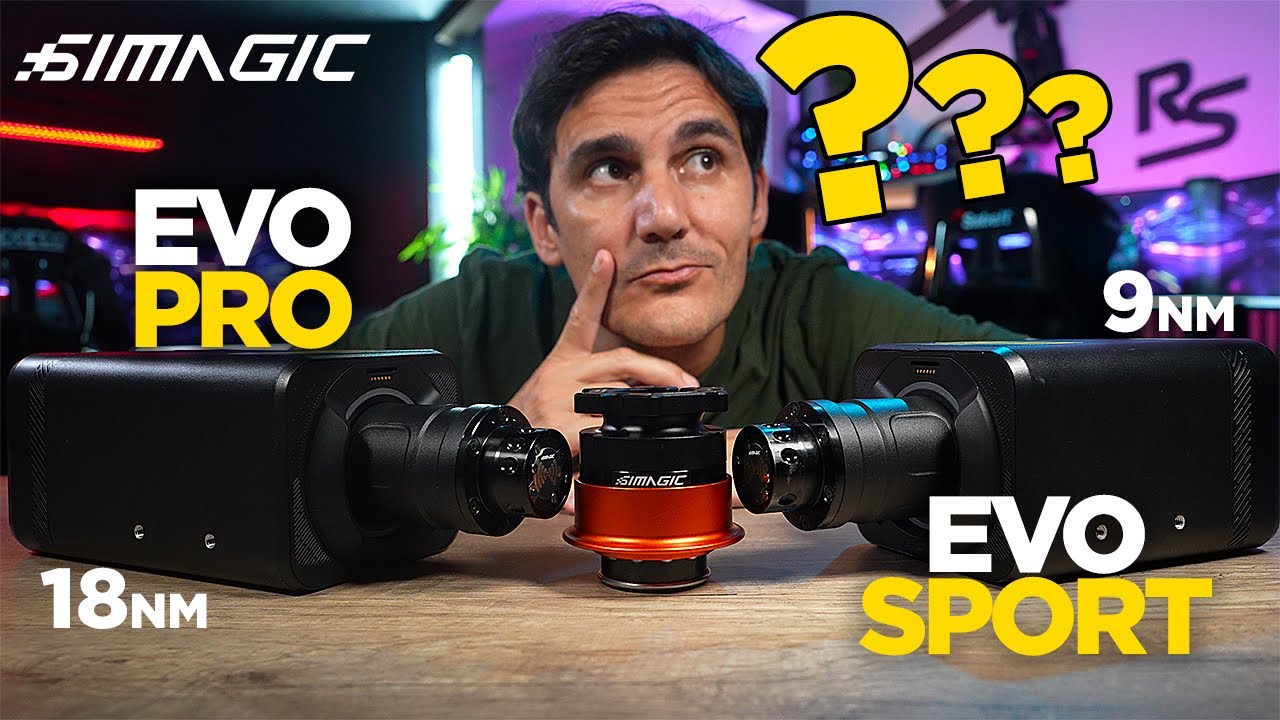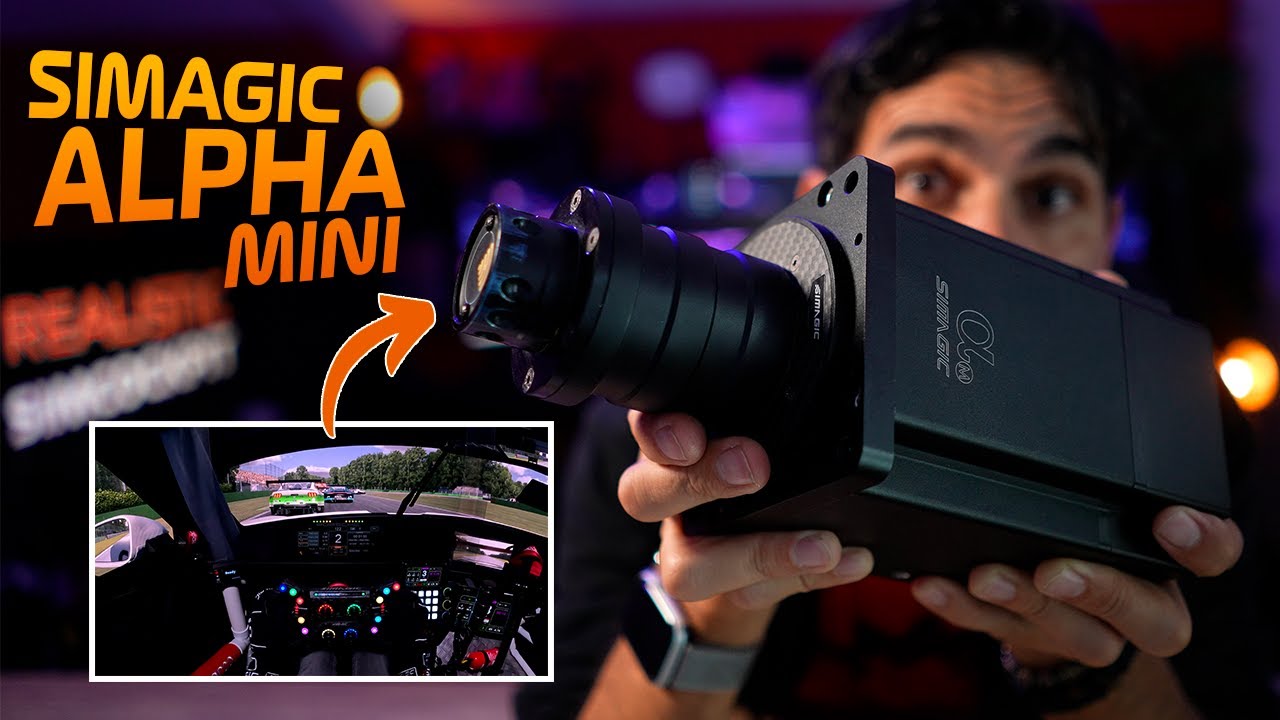
The Alpha EVO Sport surprised me with its responsiveness and the amount of information it communicates with 9 Nm. After several weeks in different simulations, I consider it sufficient for my needs, provided mounting and settings receive proper attention. Simagic sent me this base for review without approval rights over the video; my impressions concern this unit and the features available during filming.
Unboxing and new design
The box contains the base, power supply, two USB cables and different screw lengths for bottom mounting. The second cable, USB-C, serves the USB passthrough feature. The Sport weighs less than the Alpha Mini; its aluminium body and plastic end sections retain a finish I find well executed.
The first difference is apparent when turning the shaft: it feels light, smooth and free of noticeable notches. The EVO range changes the motor and adopts a 21-bit encoder. What interests me most in this test is the result in my hands: highly responsive steering that quickly transmits changes in the road.
The quick release remains D1 Spec-style. The front contact board has been revised, but this change makes the old Simagic extension incompatible. At the time of filming, a new extension is still awaited. Integrated front mounting points have also disappeared; installation uses the bottom or suitable side accessories.
Connections, halo and announced features
Connections are now at the rear, making cable routing easier than on older Alpha bases. I appreciate the accessible power button on the base. Accessory ports group Simagic equipment together; they are not a universal hub for keyboards, mice or other manufacturers’ devices. Those can still connect separately to the PC.
The illuminated halo can indicate a profile or telemetry such as ABS, flags and traction control. It can be disabled in software. However, visibility depends heavily on the wheel: a GT or formula wheel may hide it almost completely, whereas a simple round rim exposes more of it.
USB passthrough is presented as a future way to route a third-party wheel’s data through a suitable quick release. That release is still a prototype in the video. I therefore do not present this as a solution already tested with every wheel. The UP+ range concerns accessories and evolving uses, rather than a promise to freely increase the Sport’s power.
Installation and SimPro Manager
For mounting, Simagic offers side brackets that allow tilt adjustment on an aluminium profile. After connecting power and USB, I configure the base in SimPro Manager. Profiles include screenshots showing the settings to reproduce inside each simulation.
Maximum force is now controlled by one slider. In my tests, I retain the base’s capability and mainly adjust force within the game. Rotation angle and soft-lock firmness are separate settings. A distinct stop matters to me because it indicates when maximum steering has been reached.
Smoothing, road detail, friction and inertia then shape the steering’s character. I can add weight to the wheel or reduce fast effects. The Le Mans Ultimate, iRacing and ACC presets worked well for me with their accompanying game settings. Once a profile is selected, automatic activation when the simulation starts works properly.
What I feel on track
The steering feels natural, detailed and communicative. Weight transfer, track textures and grip losses are easy to follow, particularly in Le Mans Ultimate. Fast response can also transmit fairly strong frequencies: slew-rate adjustment and smoothing provide practical ways to calm them.
I notice a rubbing sound around the ring, which I identify in the video as part of the intended operation. However, under these test conditions I did not experience the heat I had with my Alpha Mini, nor did I hear the cooling fan activate.
The 9 Nm were sufficient in most of my sessions. The few saturation examples mentioned mainly involve modified Assetto Corsa content. This remains my experience, not a universal guarantee. Cockpit rigidity is also crucial: if effects make the installation vibrate excessively, I suggest reducing detail or responsiveness before automatically lowering all the force.
What we liked
- Smooth, responsive force feedback rich in information.
- Useful profiles and automatic activation.
- Rear connections and no troublesome heat during my tests.
What we liked less
- The old extension becoming incompatible.
- The loss of integrated front mounting points.
- No official console compatibility at the time of testing.