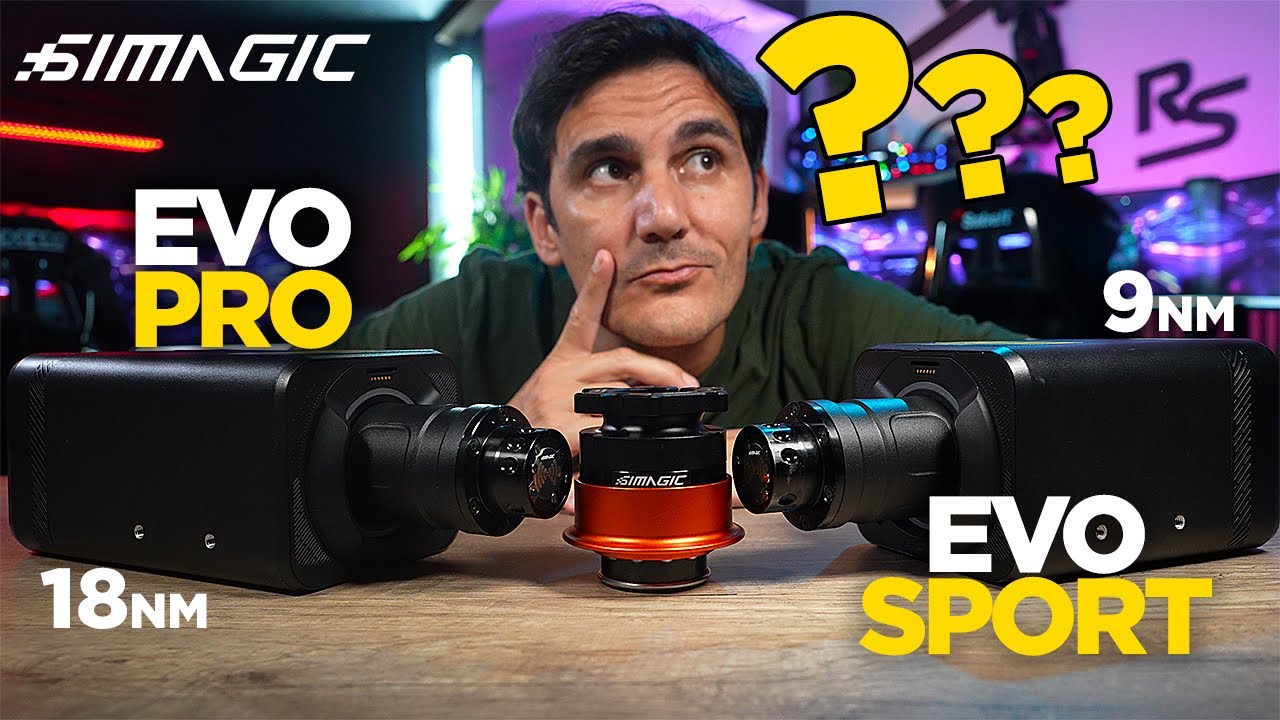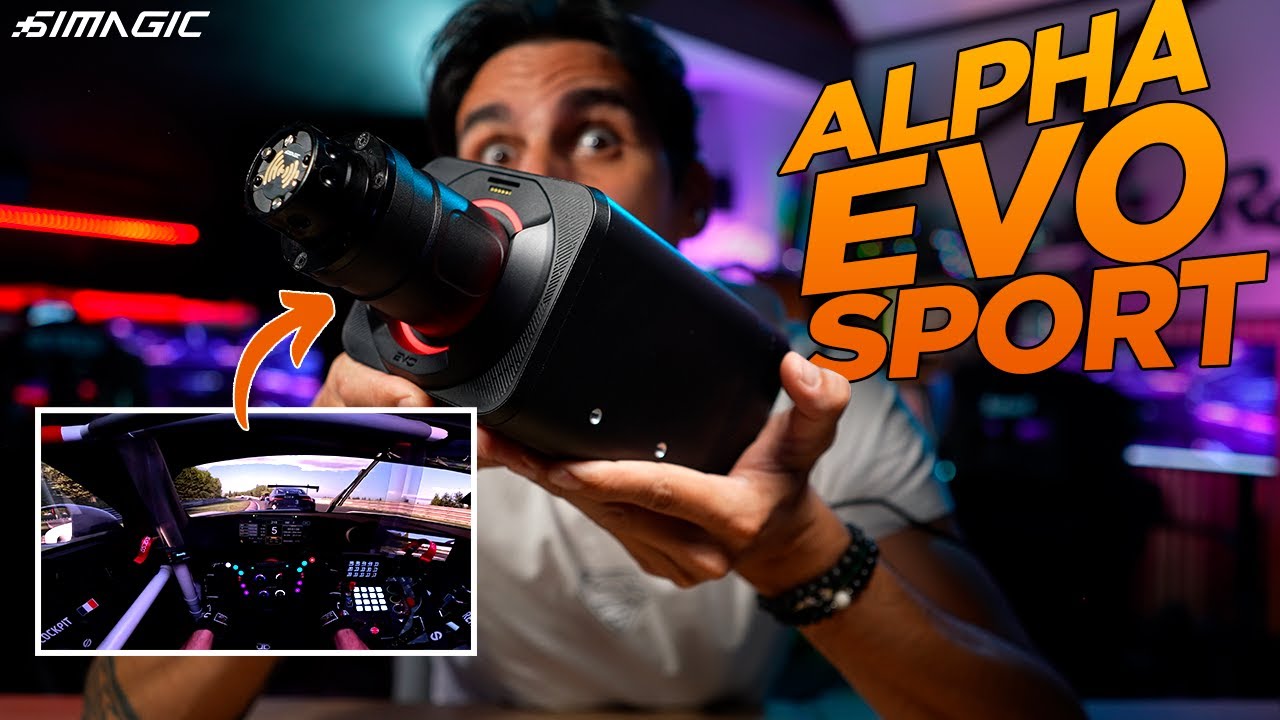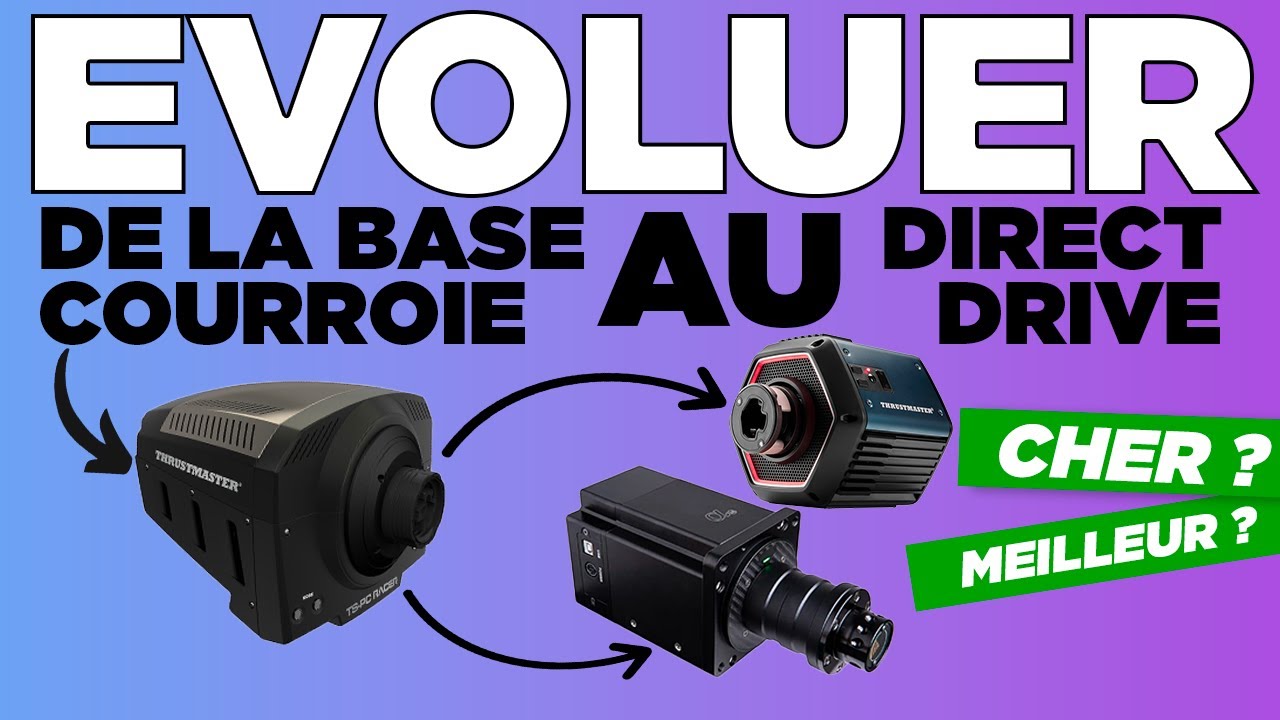
After six months with a second-hand Simagic Alpha Mini, I review its installation and behaviour in my usual simulators. I particularly enjoyed it on circuits, where the force feedback feels natural and easy to interpret. My experience in EA WRC is more mixed. This review concerns the Alpha Mini and the software available at the time, not the later EVO generation.
Integrating a compact base into the cockpit
The Alpha Mini immediately feels solid. I like its understated appearance and the choice of bottom or side mounting. Depending on the support, brackets can help achieve the right angle. In my installation, a shaft extension also lets me place the base behind the screens.
The switch on the power cable looks simple, but I made a mount that keeps it accessible from the seat. Since the back of my base is hidden, this is actually convenient. The side USB connector does not bother me either, although it may look less tidy on another rig. The small green light on the front is more annoying because I cannot simply remove it.
Quick release and wheel choice
I appreciate the D1 Spec connection for its rigidity. It engages positively and feels secure. Simagic wheels communicate through the system used by this generation; a third-party wheel retains a separate USB connection to the PC.
That separation allows several options: a simple round rim, a DIY wheel or another manufacturer’s USB model, provided the mechanical connection and electronics are suitable. Mounting a wheel is therefore not the same as making its buttons and display compatible.
SimPro Manager: start with a profile, then refine
The software is not visually spectacular, but it provides useful torque, sensitivity and effect settings. I appreciate profile selection associated with the launched game and the recommendations for in-game settings.
The force-feedback frequency setting particularly interests me because it changes the texture of the response. I can seek a softer, more organic feel or retain more detail. Results also depend on the fitted wheel, its weight and diameter, so I do not use one universal setting for everyone.
The software steering stop is well implemented too, with several resistance levels. That matters in daily use alongside the advertised 10 Nm maximum torque, which I find sufficient for my configurations.
Games still feel different
In iRacing, the initial profile already suits me very well. Road information feels balanced, without the grain I had experienced on other bases. In Dirt rally driving, steering movements and weight-transfer inputs feel fluid and natural. GT3 cars are also enjoyable with the GT NEO.
Le Mans Ultimate provides tyre and kerb sensations that I particularly enjoy. Assetto Corsa Competizione feels less expressive to me in certain suspension movements. That describes my experience of the games, not necessarily something the base can correct.
EA WRC took more work to find a suitable balance. In that specific title, I had preferred some of my MOZA R9 settings. This does not overturn the overall result, but it prevents an unqualified recommendation to someone who drives only that game.
What we liked
- Solid construction, the quick release and mounting flexibility.
- Smooth, readable feedback in my circuit-racing games.
- Software profiles and no overheating problem observed during my tests.
What we liked less
- Less convincing setup results for me in EA WRC.
- The front LED and some connector details, depending on the installation.