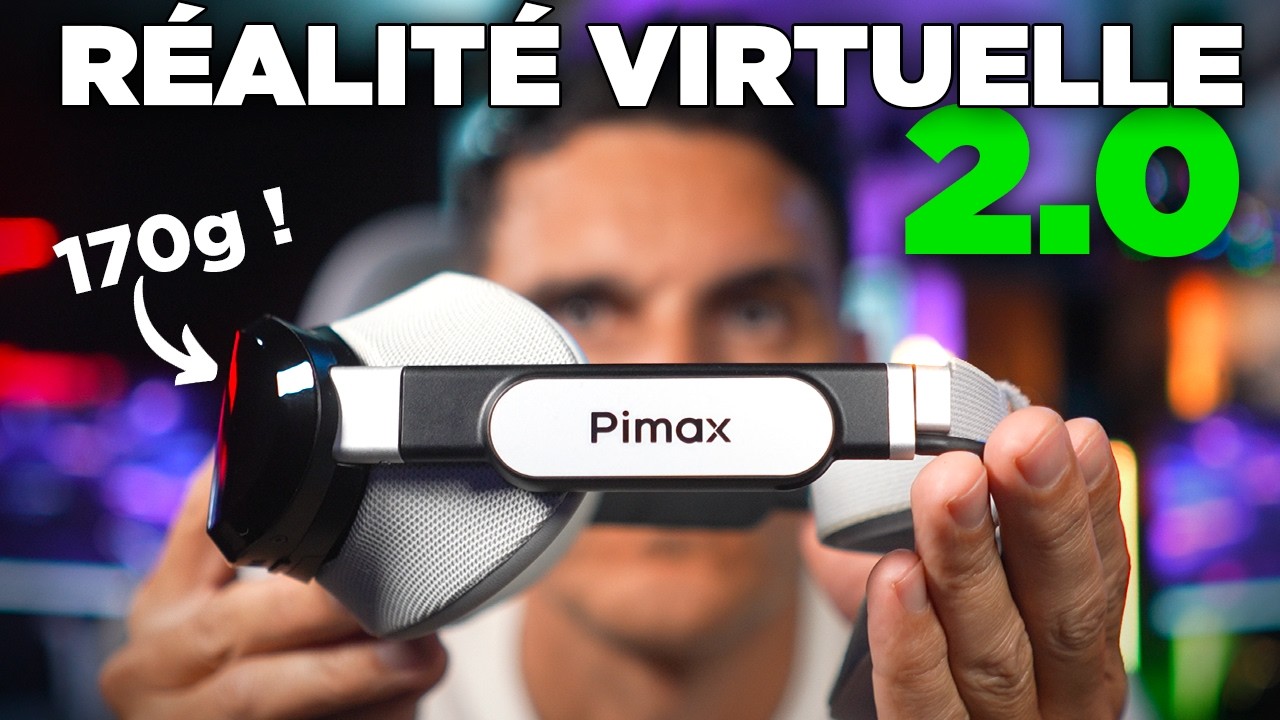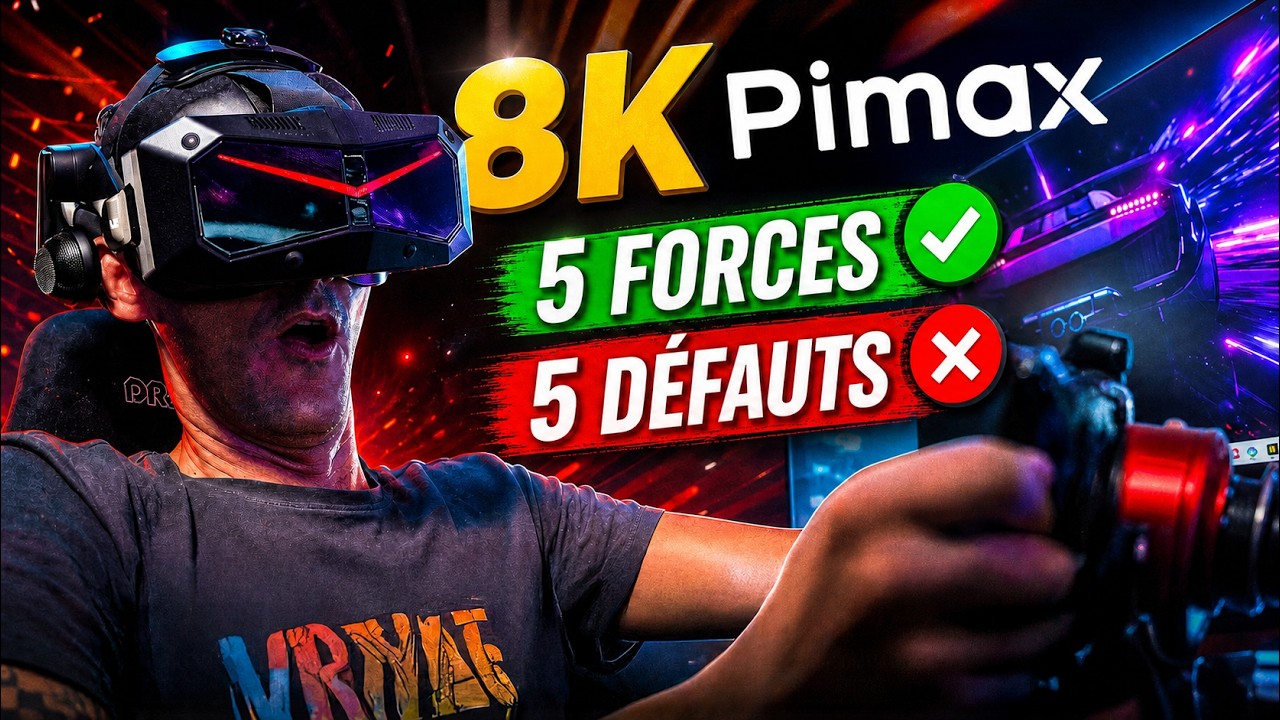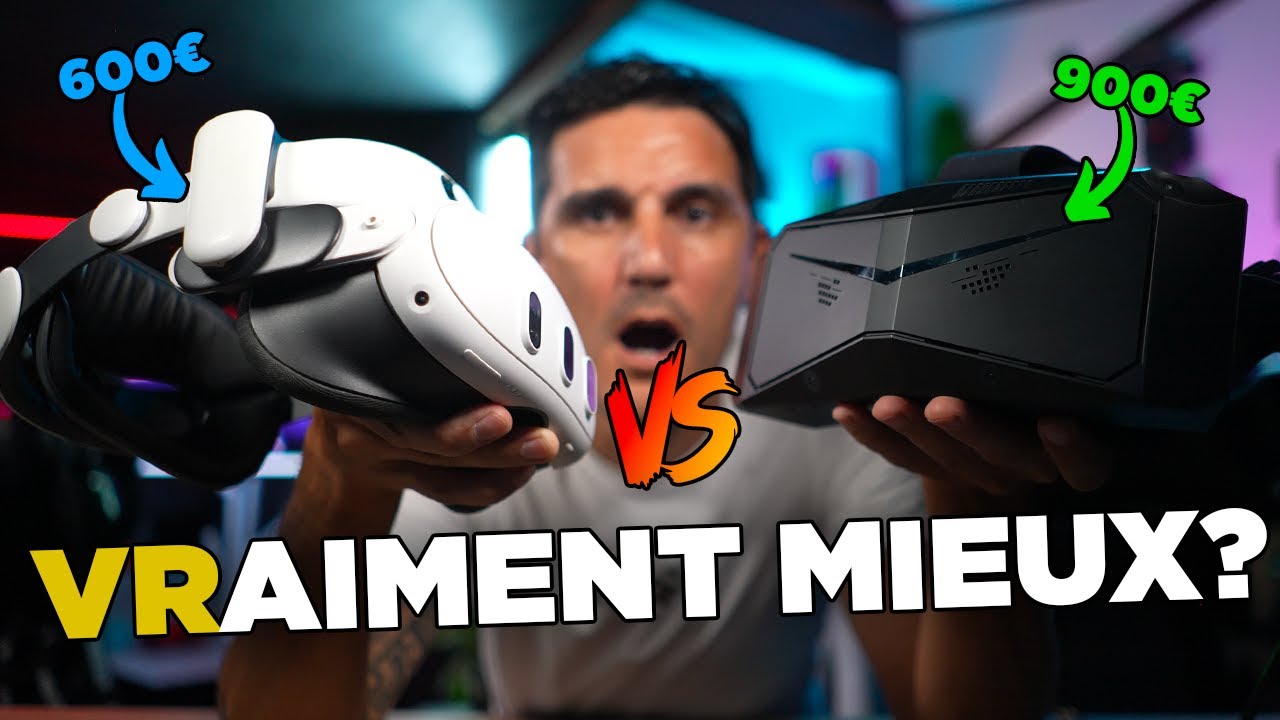
After the Crystal Light and the Crystal Super’s 57 PPD QLED module, I spent several weeks with the 8K Micro-OLED module. Pimax loaned me the equipment for this review. I mainly used it for racing, in daylight and at night, looking at instrument readability as well as sustained comfort. The visual improvement is clear, but optical compromises and bulk have not disappeared.
A different optical module on the same platform
The Crystal Super allows its optical module to be replaced. In this video, I move from the 57 PPD module to Micro-OLED rather than treating every module as interchangeable in its results. They do not offer the same balance of detail, field of view and graphics workload.
The appeal is keeping the headset and its functions while changing the display assembly. I see an upgrade path, without suggesting that an upgrade will be necessary or worthwhile for everyone. Here, I am mainly interested in the Micro-OLED module’s blacks, contrast and clarity.
Installation and comfort are part of the result
The headset connects through DisplayPort and USB with a separate power supply. Cameras provide tracking without external stations. Black-and-white passthrough helps me find the controls or locate myself in the room, but I do not use it as a proper mixed-reality view.
My setup includes the Comfort Top Strap and DMAS earphones. The extra strap improves weight distribution. To my ears, however, DMAS does not radically transform the sound: I could have kept the standard speakers, which already seem adequate.
Changing the facial cushion made a much bigger comfort difference. The thinner interface initially supplied did not suit me; another cushion helped me achieve a better fit. This also matters when placing my eyes correctly in relation to the lenses. The headset remains bulky and needs careful balancing, even though I find it more comfortable than some earlier models.
Preparing Pimax Play
I begin with room and tracking setup, followed by IPD and eye-tracking calibration. The headset-position reminder is useful: I would rather correct the physical fit before searching graphics settings for a solution.
Pimax Play lets me select refresh rate, field of view and rendering quality. A 72 Hz mode offers a less demanding target than 90 Hz. I also show the sharpness control, which I appreciate, together with foveated-rendering and smoothing options. I did not evaluate all those compensation methods in depth during this test.
My good results with an RTX 5070 do not mean every game behaves alike. Le Mans Ultimate night races are more demanding in my testing. I therefore relate settings to the game and situation instead of declaring one graphics card sufficient without qualification.
What I actually see on track
In iRacing and Le Mans Ultimate, dashboards are easy to read and distant reference points remain detailed. The pancake lenses’ clear area improves reading comfort compared with my previous experiences. I spend less effort fighting the display to obtain information.
Night scenes particularly show off the blacks and contrast. In daylight, the picture seems less bright than on some QLED models, but the brightness suits me. The field of view is wide enough for my use while remaining different from modules designed around an especially broad view.
I also tried Assetto Corsa Rally. At the time of this video, my VR access depended on an additional solution because the game did not officially support it. That experience should not be treated as a test of native compatibility or guaranteed performance.
The imperfections I still notice
Slight peripheral distortion sometimes appears depending on headset position. Internal reflections are visible in menus and very high-contrast scenes. I also notice a little ghosting during some fast movements or around contrasting edges.
Conversely, neither a visible pixel grid nor panel irregularities bothered me while racing. That describes my unit and my perception. Once I concentrate on the racing line, the shortcomings often become less noticeable, but they do not disappear entirely.
What we liked
- Readable instruments and reference points, together with the lenses’ clear viewing area.
- Deep blacks and contrast during night driving.
- Replaceable optics, eye tracking and tracking without external stations.
What we liked less
- Reflections, occasional peripheral distortion and slight ghosting.
- Weight, bulk and the importance of correctly fitting the facial interface.
- A substantial budget, on top of the cost of a suitable PC.